Claude vs GPT for Visual Analysis: Which AI Model Gives Better Answers to Your Screenshots?
At SnapGPT, we sit at a unique intersection: we process an enormous volume of student questions every single day, submitted as screenshots of textbooks, problem sets, essays, exams, and more. That gives us something most AI researchers don't have — real-world data at scale.
So we did what any data-driven team would do: we dug in. After analyzing hundreds of thousands of images submitted by thousands of students across a wide range of subjects, we can now answer one of the most common questions we get:
"Should I use Claude or GPT to analyze my screenshot?"
The answer? It depends on what you're studying. Here's everything we found.
📊 How We Ran the Analysis
We looked at image submissions across SnapGPT's user base, categorizing questions by subject type and evaluating response quality, accuracy, and speed. Our dataset spanned subjects including:
- STEM fields: calculus, physics, chemistry, statistics, computer science, and engineering
- Humanities and writing: literature analysis, essay feedback, history, philosophy, and creative writing
- Mixed subjects: economics, psychology, and social sciences
We evaluated both Claude Sonnet (Anthropic's flagship model) and GPT-4o (OpenAI's multimodal model) on the same image inputs, scoring responses for correctness, depth, and clarity.
Here's what we found.
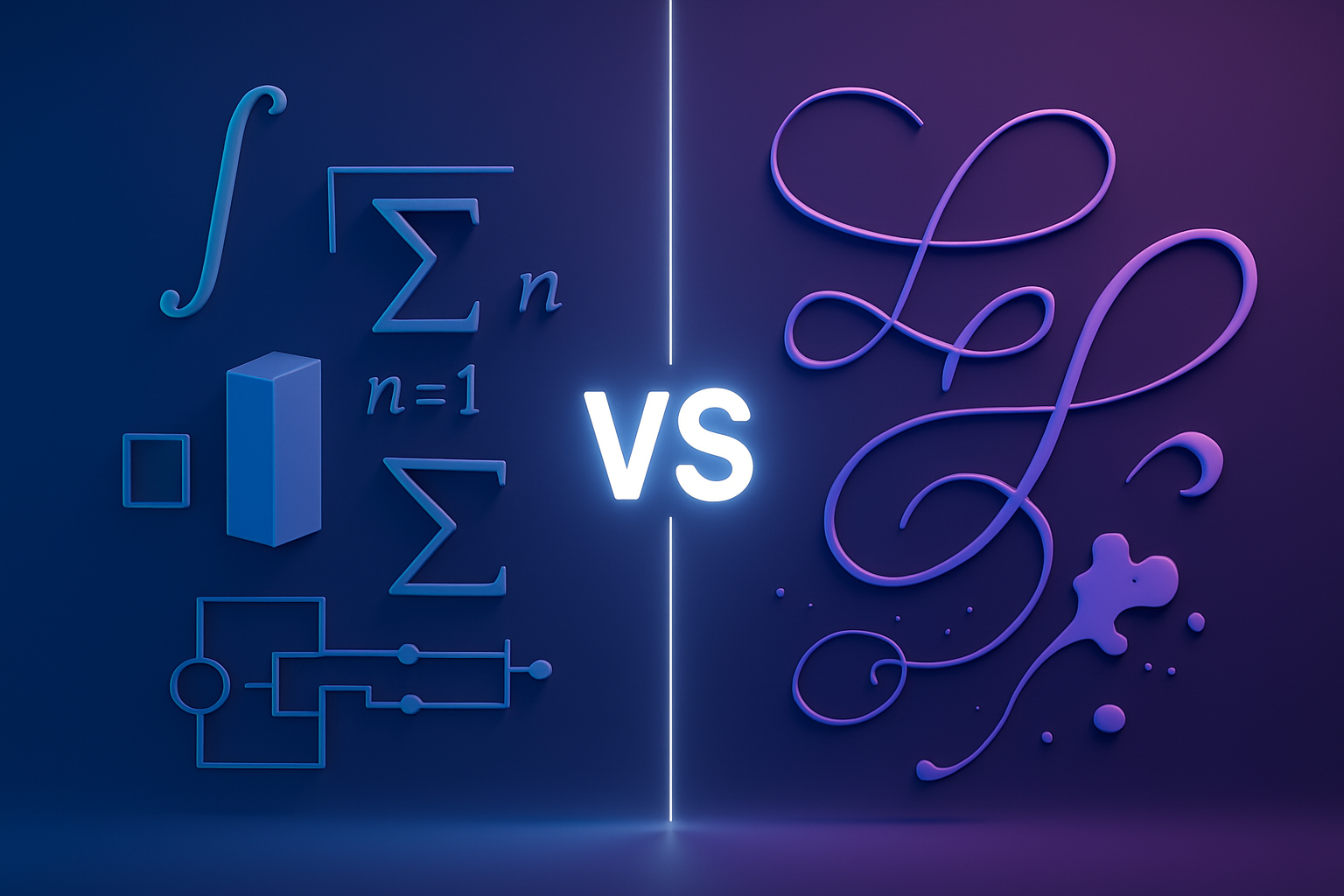
🧮 For Math & Technical Subjects: Claude Wins
If you're staring down a calculus problem, a chemistry equation, or a dense computer science diagram, Claude is your best bet.
Across our dataset, Claude consistently outperformed GPT on technical and quantitative subjects. Specifically, Claude showed stronger performance in:
- Multi-step math problems — Claude tends to show its reasoning more methodically, reducing errors in complex derivations
- Physics and engineering diagrams — Claude demonstrated better spatial reasoning when interpreting force diagrams, circuit schematics, and lab setups
- Statistics and data interpretation — Claude was more precise when reading graphs, tables, and statistical outputs
- Code and computer science — Claude's structured thinking translated well to debugging and explaining code snippets captured in screenshots
Why does Claude excel here? Claude's training appears to emphasize careful, step-by-step logical reasoning — which is exactly what you need when one wrong sign or missed step can derail an entire solution.
💡 SnapGPT Tip: When you snap a photo of a math problem or technical diagram, try routing it through Claude for a more thorough, methodical breakdown.
✍️ For Writing & Creative Projects: GPT Has the Edge
Flip the script when it comes to language-heavy tasks. For essays, literary analysis, creative writing feedback, and open-ended humanities questions, GPT tends to produce more natural, nuanced, and stylistically rich responses.
GPT outperformed Claude in our analysis across:
- Essay feedback and editing — GPT offered more fluid, contextually aware suggestions that felt closer to how a human writing tutor might respond
- Literary analysis — GPT demonstrated stronger ability to interpret themes, tone, and authorial intent from passages captured in screenshots
- Creative writing prompts — GPT's outputs were more imaginative and varied, making it better suited for brainstorming and ideation
- History and philosophy — GPT handled open-ended, interpretive questions with more depth and rhetorical sophistication
Why does GPT shine here? GPT's language generation has a certain fluency and creative range that makes it particularly well-suited for tasks where tone, style, and nuance matter as much as factual accuracy.
💡 SnapGPT Tip: Got an essay prompt or a passage you need analyzed? GPT is likely to give you richer, more stylistically polished feedback.
⚡ For Speed: GPT Is Significantly Faster
This is where the gap becomes most dramatic — and most practical for students under time pressure.
Here's what our data showed on response times:
| Model | Questions Answered in Under 3 Seconds |
|---|---|
| GPT-4o | 85% |
| Claude Sonnet | 50% |
GPT answered 85% of questions in under 3 seconds, while Claude Sonnet only hit that mark for 50% of questions. That's a significant difference when you're cramming before a test or trying to get through a problem set quickly.
Claude's slower response times are likely a byproduct of its more deliberate, thorough reasoning process — which, as we noted above, pays dividends in technical accuracy. But if you need a fast answer and the subject matter is more straightforward, GPT's speed advantage is hard to ignore.
💡 SnapGPT Tip: On a time crunch? GPT will almost always get you an answer faster. For complex technical problems where accuracy matters more than speed, the extra wait for Claude is usually worth it.
🔍 The Bottom Line: Use the Right Tool for the Right Job
Here's a quick cheat sheet based on our findings:
Choose Claude when: - You're working on math, physics, chemistry, or engineering - You need step-by-step problem solving - You're interpreting technical diagrams, code, or data - Accuracy is more important than speed
Choose GPT when: - You're writing an essay or need writing feedback - You're analyzing literature, history, or philosophy - You need creative brainstorming or ideation - You need a fast answer and every second counts
How SnapGPT Puts This Into Practice
One of the core advantages of using SnapGPT is that you don't have to be an AI expert to get the best results. Our platform gives you access to both Claude and GPT, so you can choose the model that fits your task — or experiment with both to see which gives you the most useful answer.
We're also continuously analyzing performance data to improve our recommendations. As these models evolve (and they evolve fast), we'll keep updating our guidance so you're always working with the best tool for the job.
Final Thoughts
The "Claude vs GPT" debate doesn't have a single winner — it has two specialists. Claude is your analytical, methodical problem-solver for STEM. GPT is your articulate, creative communicator for writing and humanities. And when speed matters, GPT has a clear edge.
The smartest students don't pick one and stick with it blindly. They understand their tools and use them strategically.
Ready to put this into practice? Download SnapGPT, snap a screenshot of your next assignment, and let the right AI model do the heavy lifting. Your grades will thank you.